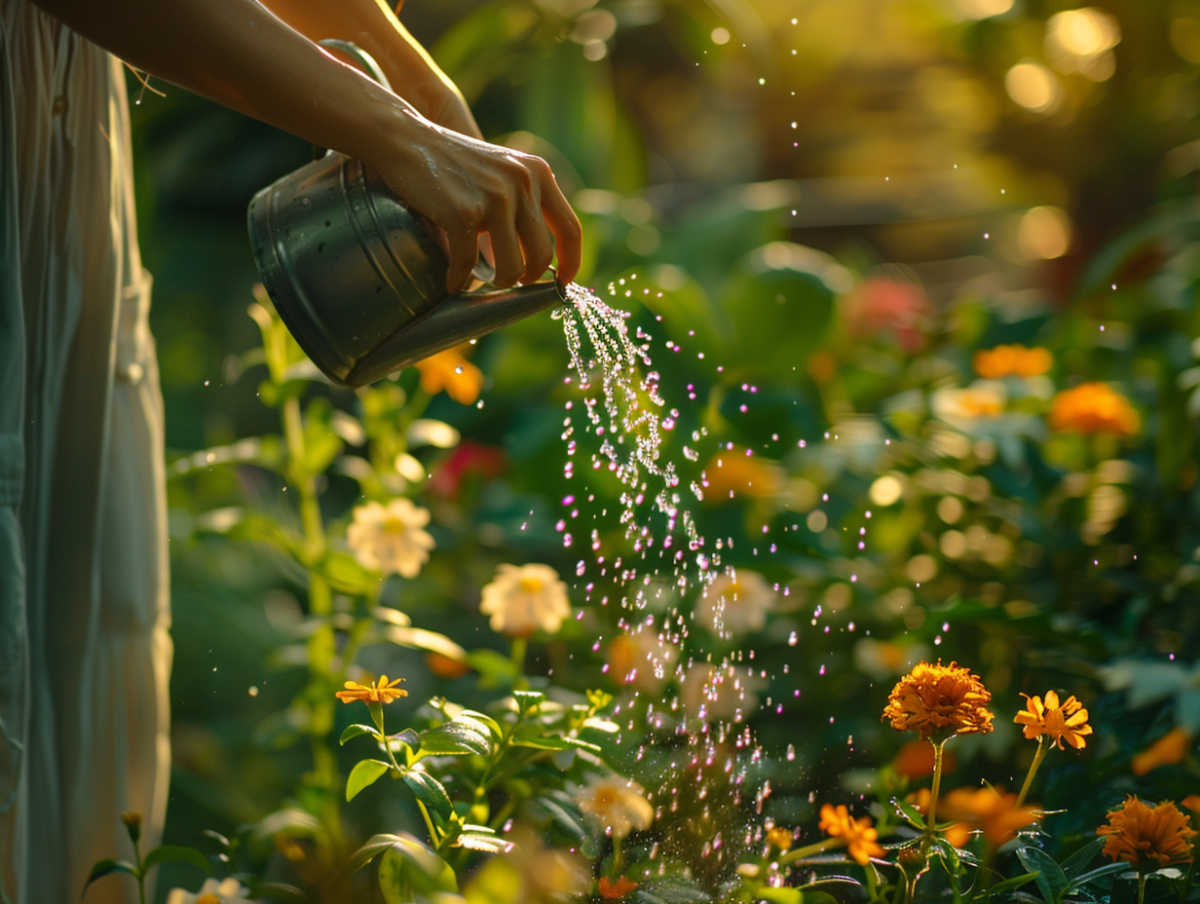
When the days lengthen and the heat sets in, summer plants become jewels in gardens and on balconies. For them to thrive fully, certain special attentions are necessary. Abundant light and high temperatures can be allies, but also challenges to overcome.
Hydration remains essential, especially during heatwaves. Soils must be kept moist without becoming waterlogged. In addition to watering, the choice of fertilizer and protection against pests play a fundamental role in ensuring a vibrant and lasting bloom.
Watering and Humidity
Watering is an essential aspect of keeping your summer plants healthy. Each type of plant has specific water needs.
Calatheas require frequent watering, about 3 to 4 times a week, to maintain their lush foliage. In contrast, succulents and cacti need much less attention: watering every 15 days is more than sufficient.
To optimize watering, use suitable systems such as oya, which provide continuous and gradual irrigation, ideal for keeping the soil moist without excess. Tropical plants, on the other hand, thrive in a high-humidity atmosphere. A spray bottle can be used to mist the foliage, mimicking their natural habitat.
- Calatheas: watering 3 to 4 times a week
- Succulents and cacti: watering every 15 days
- Oya: for continuous and gradual watering
- Tropical plants: need high humidity
A water meter can help you measure precisely the amount of water used for each plant. Automatic irrigation systems can also be a practical solution, especially for those who are frequently away. Poor humidity management can lead to undesirable symptoms such as brown leaves on oleander, a sign of water stress or excessive sun exposure.
To water effectively, prefer morning or late evening to avoid rapid evaporation of water. This strategy also helps limit the risk of leaf burn caused by water droplets acting as lenses under the scorching sun.
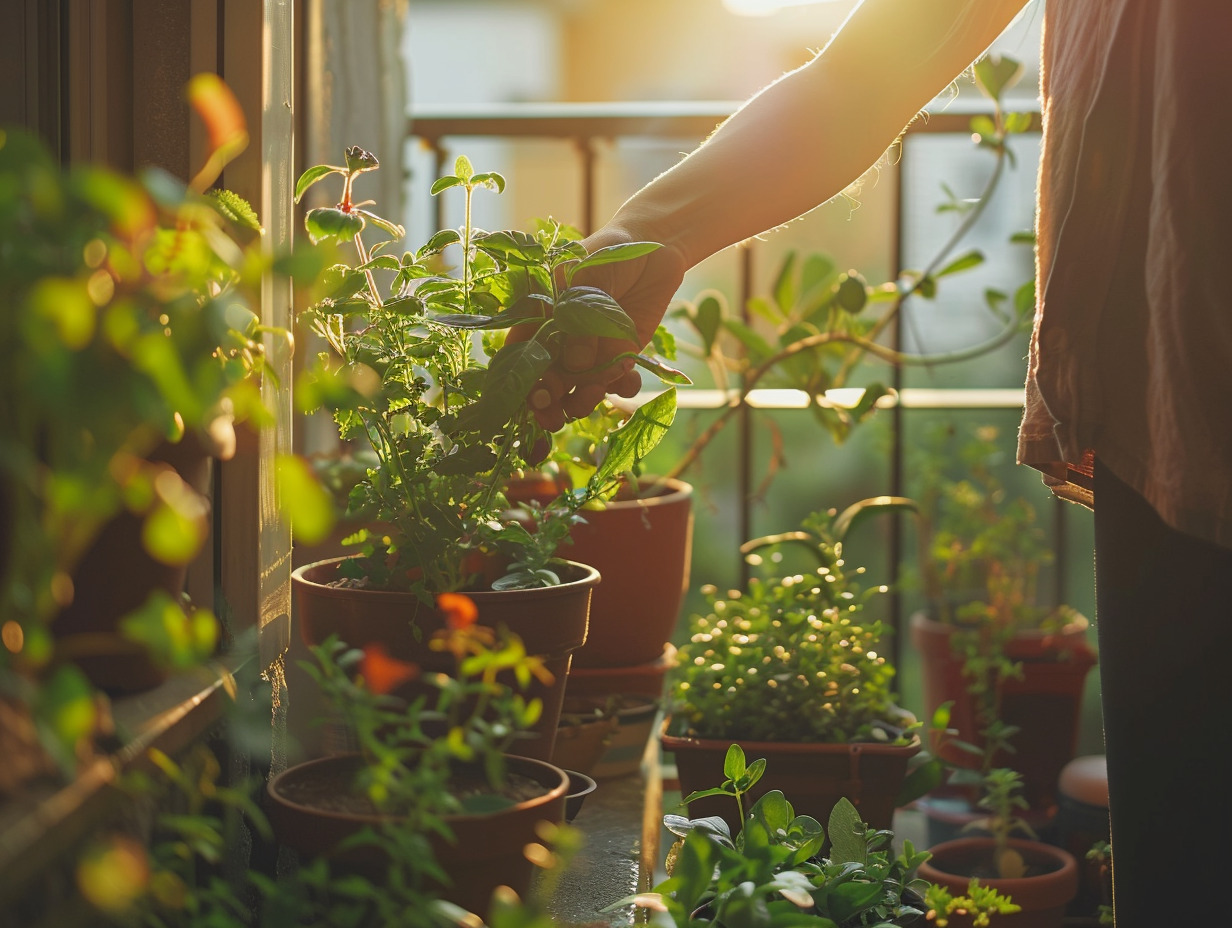
Protection Against Heat and Pests
Summer temperatures can be daunting for your plants. Some species, such as Dracaena, Pothos, Asparagus, and Pilea, tolerate dark spaces well and can be moved to the shade to protect them from excessive heat. Others, like Ficus, tolerate a lot of light and sun but require increased monitoring to prevent burns.
To keep the soil hydrated, use mulch. Mulching helps retain moisture and regulate soil temperature. In terms of pest protection, insect nets, aphid nets, and bat exclusion nets can be deployed to protect your plants. These nets are particularly effective for flowering plants, which are often targeted by various pests.
In case of infestation, resort to pesticides to eliminate pests, but prefer natural solutions to avoid harming your garden’s ecosystem. Air conditioning can affect ambient humidity, making it necessary to use a humidifier to compensate for indoor air dryness.
For indoor plants requiring constant light, a grow LED lamp can provide the necessary lighting. Shade cloth is also an option to protect your plants from direct and intense light.
- Dracaena, Pothos, Asparagus, Pilea: tolerate dark spaces
- Ficus: tolerates a lot of light and sun
- Mulch: retains soil moisture
- Insect and aphid nets: protect plants
- Grow LED lamp: provides necessary lighting