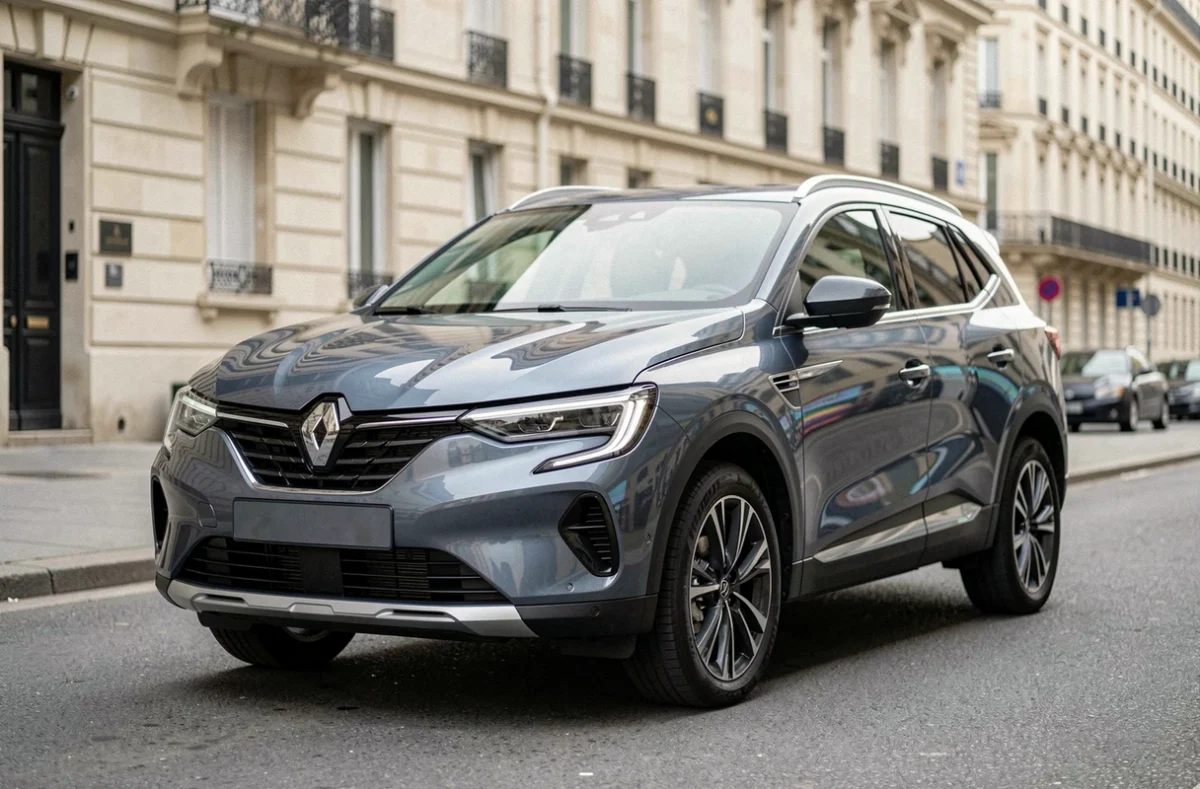
On a covered parking lot, the gray rafale Symbioz leans towards a neutral medium gray, almost versatile. Just take it out under a clear sky to see bluish reflections appear on the sides and the hood.
This discrepancy between the artificial lighting of the dealership and natural light confuses more than one buyer. We take stock of the actual behavior of this metallic shade, the areas sensitive to scratches, and the actions that preserve its shine without taking up an entire weekend.
Paint code KQJ and aluminum pigments: what produces the reflections of gray rafale
The gray rafale carries the paint code KQJ in Renault configurations. This reference is useful for ordering a touch-up pen or obtaining a bodywork quote, but it is recommended to verify it on the identification label affixed to the vehicle, as it may vary by market.
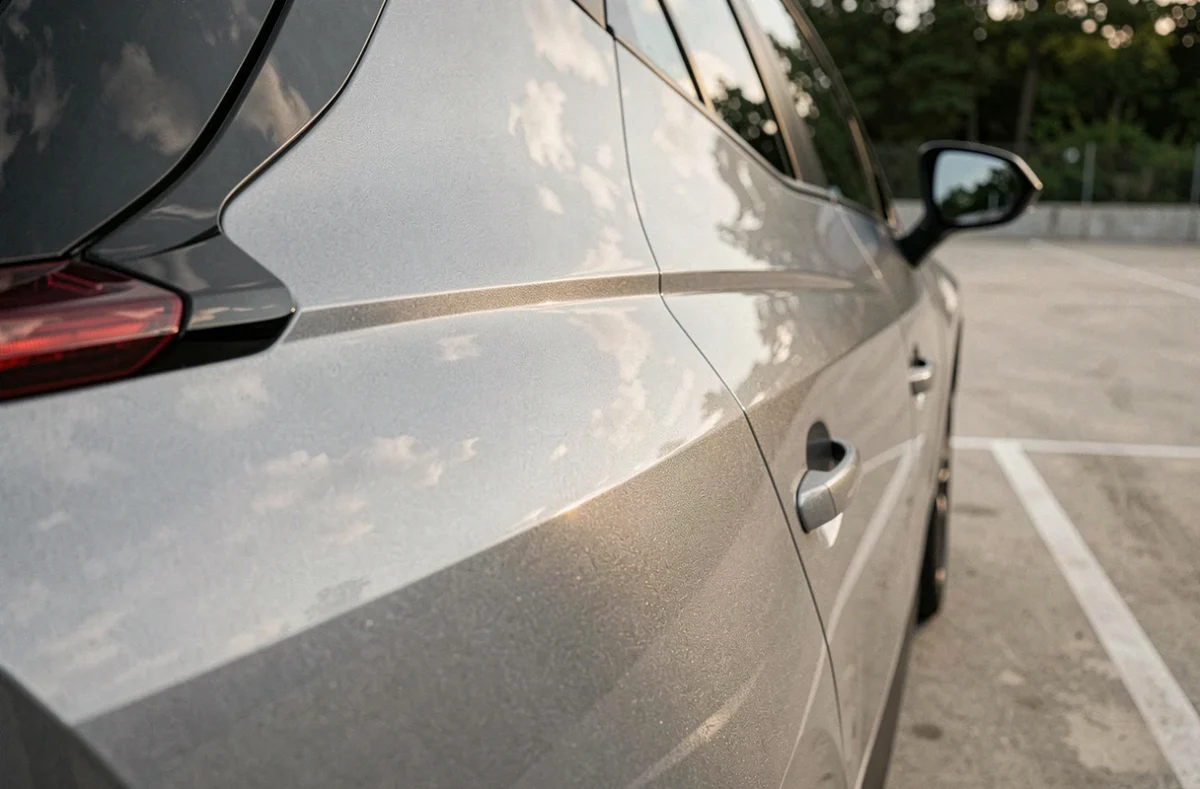
The metallic base incorporates aluminum pigments. Under artificial light in the dealership, the rendering remains uniform, leaning towards a sober light gray. Outside, the reflections change depending on the time and angle of view. In full sunlight, marked bluish hues stand out on the curved surfaces. In low light, morning or late in the day, the shade shifts to a warmer gray.
This optical behavior explains why two owners of the same Symbioz describe different colors. Before finalizing the order, it is better to observe a specimen parked outside, not just under the showroom’s neon lights.
For a detailed analysis of the shades in everyday life, one can consult the gray rafale of the Renault Symbioz with concrete feedback on the rendering in real conditions.
Availability of gray rafale depending on the finish of the Renault Symbioz
Beware of the configurator trap: the gray rafale is not offered on all finishes or all model years. Some versions only display the Cassiopeia Gray or pearlescent white. The gray rafale notably appears on the Alpine spirit finish, but its availability fluctuates.
Before projecting onto this shade, one should systematically check the Renault configurator corresponding to the targeted model year. A Techno finish of a given year may offer the gray rafale while another model year no longer lists it. This is not a detail when looking for a used vehicle or one in stock at a dealership.
Areas sensitive to scratches on a metallic gray bodywork
On a metallic shade like gray rafale, micro-scratches are more visible than on a solid white. The aluminum pigments capture light, and each scratch creates a point of diffraction visible in the sun.
The critical areas are not limited to the hood and the front bumper. Three points deserve particular attention:
- The trunk threshold endures friction with every loading of bags, suitcases, or strollers. A transparent protective film applied right at delivery prevents marks.
- The contours of door handles accumulate micro-scratches caused by rings, keys, and nails during daily handling.
- The sills and wheel arches receive gravel projections, especially on highways or local roads.
Identifying these areas early allows for targeted protection rather than treating the entire bodywork.
PPF or ceramic: choosing the right protection for gray rafale
It is often said that ceramic is enough to protect everything. In practice, PPF and ceramic address two distinct risks and are not interchangeable.
The PPF (Paint Protection Film) absorbs mechanical impacts. It is primarily applied to the hood, front bumper, sills, and trunk threshold. It withstands gravel and minor impacts without affecting the original varnish.
The ceramic treatment, on the other hand, deposits a hydrophobic layer on the varnish. It facilitates washing, limits the adherence of insects, resin, and droppings, and gives a depth effect to the metallic gray. However, it does not protect against a stone impact.
For daily use with mixed trips (city, highway, supermarket parking), the combination of both yields the best result: PPF on impact areas, ceramic on the rest of the bodywork. Feedback varies on the durability of ceramic alone in intensive use, but it remains a good compromise if the budget does not allow for full film coverage.
Washing and regular maintenance of the metallic gray rafale Symbioz
A metallic gray forgives less than a solid white. Limescale marks after drying, dirty rain halos, and fine dust become quickly visible under direct light.
Some concrete habits limit the damage:
- Wash by hand or with a low-pressure jet using a neutral pH shampoo. Automatic wash rollers create micro-scratches on metallic varnishes.
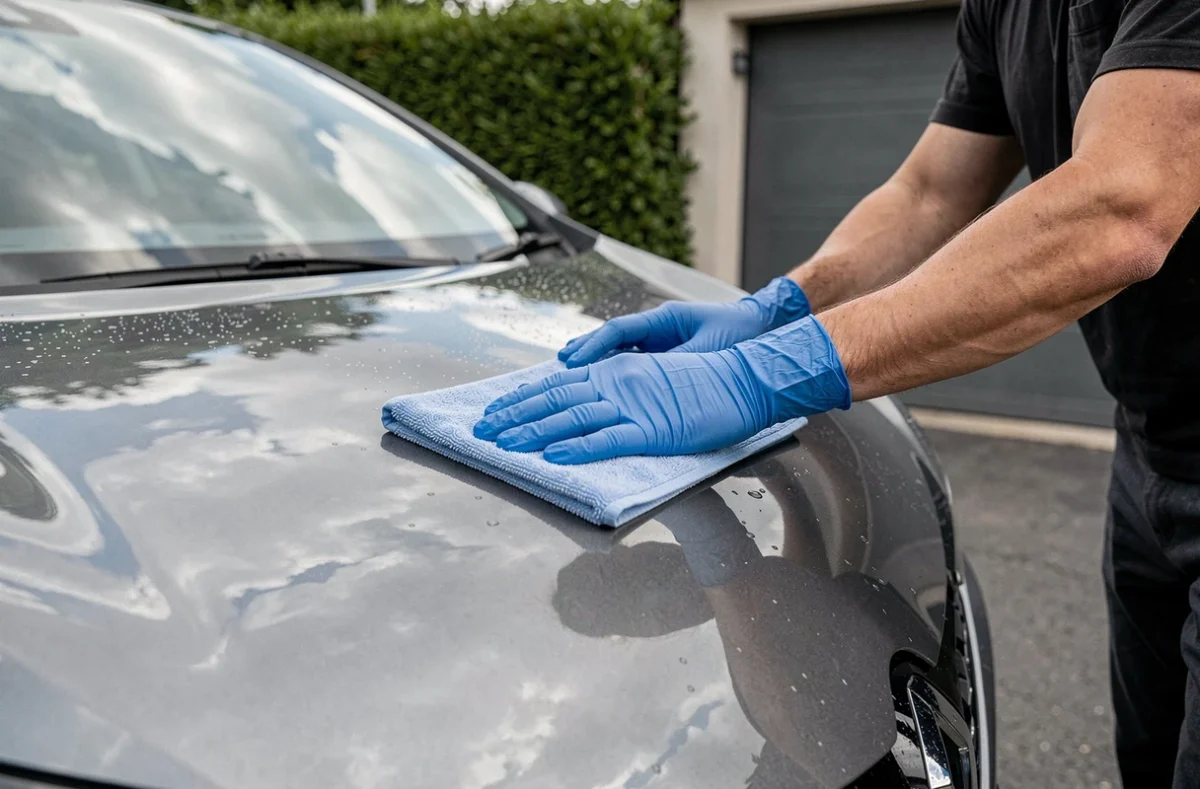
- Dry with a long-pile microfiber cloth, without rubbing. Water that dries in the open air leaves visible mineral deposits on the gray rafale.
- Apply a quick detailer after each wash to revive the depth effect and add a thin layer of protection between two complete treatments.
- Clean the contours of handles and the trunk threshold first, as these are the areas where ingrained dirt scratches the most during cloth passes.
The My Renault application can be used to schedule mechanical maintenance reminders, but for the bodywork, it is the regularity of washing that makes the difference. A wash every two weeks in regular use is enough to maintain the original rendering.
The gray rafale of the Symbioz requires a bit more attention than an opaque shade, but the result is worth it. Targeted PPF, well-applied ceramic, and regular washing without rollers are sufficient to preserve the metallic reflections over time. The KQJ code noted on the vehicle’s label remains the reference to keep handy for any future touch-ups or repairs.