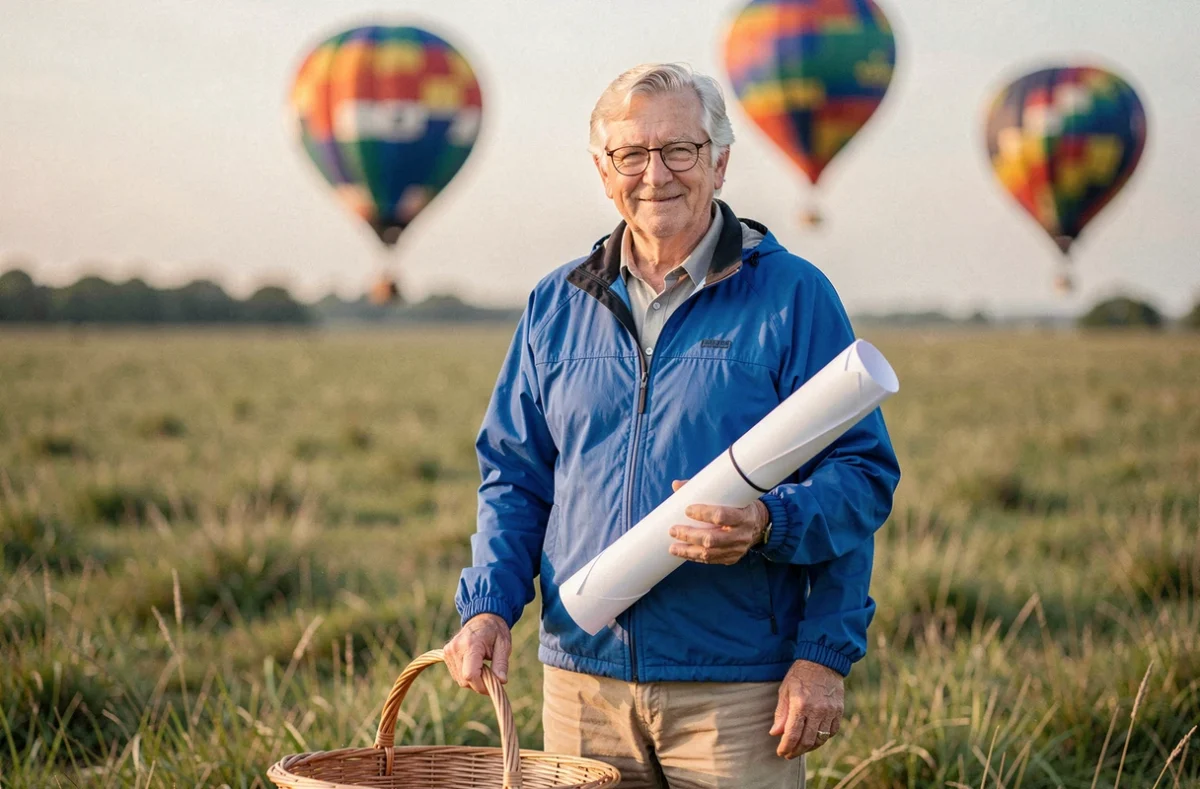
When octogenarians challenge the skies in a hot air balloon, enthusiasm meets apprehension. Advanced age requires specific precautions. Certain health issues, such as heart or respiratory problems, can be prohibitive. Therefore, a comprehensive medical assessment is essential before venturing into the blue. The physical demands should not be overlooked: strength and flexibility are necessary to board the basket. At 80 years old, adaptation is necessary, with assistance for boarding and disembarking. Finally, hydration and appropriate weather gear are crucial to counter thermal variations. Thus, age is not a barrier, but a challenge to be tamed.
Advanced Age and Hot Air Ballooning: An Exciting Challenge
Soaring into the skies in a hot air balloon, an adventure that sparks wonder and excitement in many adventurers. But for those who have reached an older age, this experience can be both thrilling and stressful. This is where the exciting challenge lies: combining advanced age with hot air ballooning.
The first question many ask is often related to safety. Is hot air ballooning safe for older individuals? The answer is generally yes • flights are carefully planned by experienced professionals to ensure a safe and enjoyable experience for all passengers, regardless of their age or health status.
But of course, as with any other type of physical adventure, there are certain risks to consider before embarking on such an exhilarating journey. For older individuals in particular, the increased cardiovascular risk can be a major concern when considering such a challenge.
It is important to know that at altitude, the lack of oxygen can put additional pressure on the heart and cause shortness of breath or heart palpitations in certain vulnerable individuals. Therefore, it is imperative to consult your doctor before making any final decisions to obtain their clear approval for this bold project.
Essential Medical Contraindications to Consider
It is crucial to pay special attention to medical contraindications. These are specific situations, indicated by doctors or mentioned in medication leaflets, where the use of a pharmaceutical substance may prove harmful to the patient. Sometimes, these contraindications can be absolute: meaning that the medication in question should not be used under any circumstances. In other cases, they are relative and require careful consideration before taking the treatment.
Among these contraindications to be taken seriously are certain personal histories such as a known allergy to the product or one of its excipients. It is also important to check if the patient has previously had adverse reactions to this type of product. Serious side effects previously experienced are also a sufficient reason to forgo certain pharmaceutical treatments.
Additionally, there are physiological situations that make the use of certain products prohibited: this is particularly the case during pregnancy or while breastfeeding, where several chemical substances present in various medications can be harmful to the development of the fetus or the newborn. Caution is therefore strongly recommended to avoid any potential risk.
It should also be noted that there is often interaction between different active substances present simultaneously in the body.
Physical Prerequisites for a Smooth Experience
To consider an ascent in complete serenity, it is essential to pay attention to certain physical prerequisites. Physical condition plays a decisive role. Indeed, climbing requires good overall fitness and optimal cardio-respiratory capacity to face the altitude and the intense efforts it entails. Therefore, before any alpine endeavor or high mountain climbing, ensure you are regularly active in sports activities that engage the heart and breathing.
The second aspect to consider concerns muscle strength. The muscles of both the upper and lower body will be heavily relied upon during the ascent. Thus, having worked on your strength will not only help avoid injuries but also greatly facilitate progress, especially if you are carrying your gear on your back.
In parallel, one should not overlook endurance. If you have previously engaged in endurance sports such as cycling or long-distance running, that’s a good sign as these disciplines train the body to sustain prolonged effort while effectively managing energy, which is essential during an ascent.
Another crucial element is undoubtedly joint flexibility. Joint range of motion is not always considered by mountain enthusiasts, yet it can make all the difference, especially during difficult passages where every movement counts double. A climber with good joint range will have more ease in moving and climbing.
Soaring at 80: Recommendations and Necessary Adjustments
Traversing the skies can be an exciting and enriching adventure, regardless of your age. However, for individuals aged 80 and over who are considering air travel, certain preparations are essential to ensure a comfortable and safe flight. One of the essential tips is to have good communication with the airline regarding your specific needs, such as access to medical services on board or the use of equipment like a wheelchair.
Planning is crucial. To minimize travel stress, it is recommended to book flights several months in advance. This avoids last-minute rushes or the risk of the desired flight being fully booked. Additionally, arriving at the airport well before departure time gives you ample time for security checks and other administrative procedures.
It is also advisable to adopt a healthy diet before and during your trip to prevent any discomfort. Light and balanced meals are recommended as they facilitate digestion during long-haul flights in particular.
Regular physical exercise, even moderate, promotes better blood circulation, which often reduces risks associated with lack of physical activity during air travel (such as venous thrombosis). Thus, some stretching in the aisle can help you feel better, especially when the travel duration exceeds a few hours.
During the flight, hydration is essential.