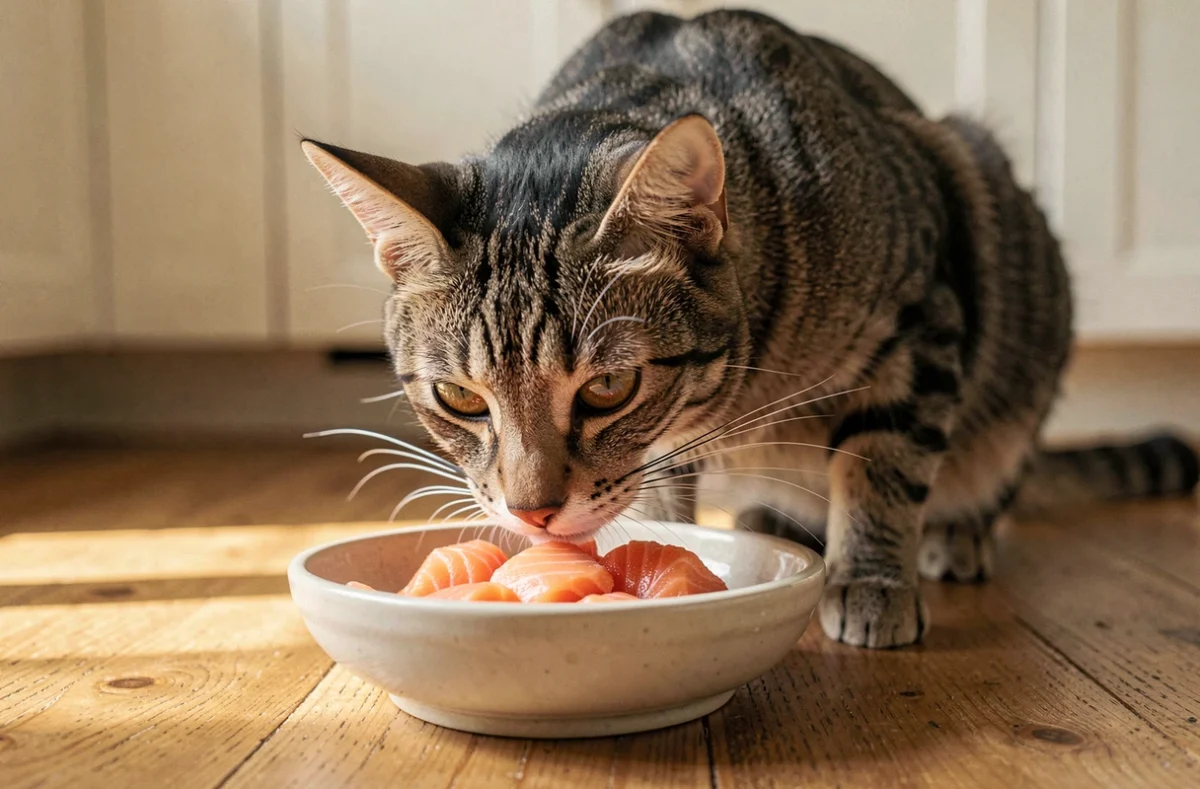
Between two identical bowls, a cat may snub one and devour the other. This behavior, often attributed to whim, actually stems from measurable sensory mechanisms. Cats’ preferred foods depend not only on their protein or fat content: texture, temperature, moisture content, and even the shape of the pieces play a crucial role in meal acceptance. Understanding these parameters allows for a better interpretation of feline dietary choices.
Texture, smell, and temperature: the factors influencing feline palatability
Most articles on cat nutrition focus on food categories (meat, fish, dairy products). This approach overlooks a more fundamental parameter: what triggers a cat’s interest in its bowl is primarily what it perceives before tasting.
A study published in the journal Animals in 2023 confirms that texture and moisture content strongly influence a cat’s acceptance of food. The fineness of the mousse, the size of the pieces, and the gelatinous or dry nature of the preparation alter feeding behavior long before flavor comes into play.
A cat has about twenty times fewer taste buds than a human. Its sensitivity to sweet taste is nearly nonexistent. In contrast, its sense of smell guides most of its choices. Food served at room temperature releases more volatile compounds than food taken straight from the refrigerator, which explains why many cats refuse cold pâté but accept it warmed.
For those wishing to delve deeper into feline taste preferences, it is possible to learn more on Cani Essence and the factors that guide our companions’ dietary choices.
| Palatability Factor | Influence on the Cat | Concrete Example |
|---|---|---|
| Smell | Determining (first criterion) | Warmed pâté accepted, cold refused |
| Texture | Strong (mousse, pieces, jelly) | Fine mousse often preferred over large pieces |
| Moisture Content | Moderate to high | Wet foods generally better accepted |
| Sweet Taste | Nearly nonexistent | No functional receptor for sweetness |
| Shape/Size of Pieces | Variable by individual | Small pieces in sauce vs. compact pâté |
Food Neophobia and Neophilia in Cats
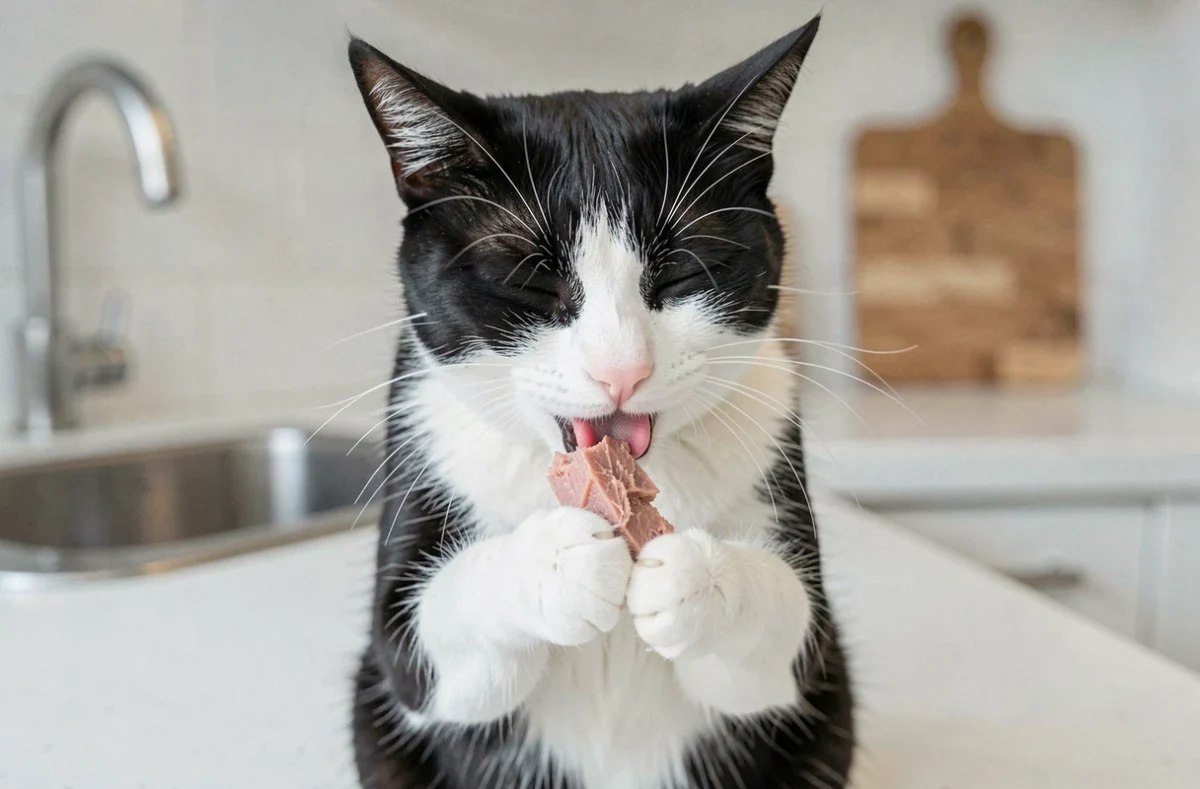
A common observation among owners is that a cat loves a food for three weeks, then suddenly refuses it. This alternation is not a character flaw. It reflects a documented behavioral trait.
Some cats are neophobic: they systematically reject any unknown food. Others, on the contrary, are neophilic and willingly explore a new flavor or texture. This individual variability explains why the same product receives contradictory reviews from one household to another, regardless of its composition.
Neophobia can develop as early as the first few months. A kitten fed exclusively on one type of kibble may develop a lasting rigidity in its diet. In contrast, early exposure to varied textures (pâté, pieces, broth) tends to produce a more adaptable adult.
Practical Implications for Food Choices
- A neophobic cat will better accept a gradual change by mixing the old and new food over several days
- A neophilic cat may quickly tire of a monotonous diet, even if it is nutritionally complete
- Refusing a food does not mean its composition is unsuitable: presentation (texture, temperature, shape) may be enough to alter acceptance
Palatability Testing Protocols: Laboratory vs. Home
Data on cats’ food preferences largely come from controlled trials. The classic method involves presenting two bowls simultaneously in a laboratory and measuring consumption. This approach poses a problem: the stress of an unfamiliar environment can skew results.
A study conducted with 62 cats and published in 2025 in Applied Animal Behaviour Science by researchers from Wageningen University & Research compared testing protocols conducted directly in owners’ homes. The results show that palatability measurements stabilize from the start of the protocol, without a long adaptation period. Extending trials mainly increases costs and the dropout rate of participants.
This finding has a direct implication: “preferred” food rankings established in laboratory conditions do not necessarily reflect the choices a cat would make in its usual environment. The home context (presence of other animals, bowl location, feeding times) alters feeding behavior.
Meat, Fish, and Offal: Hierarchy of Protein Preferences
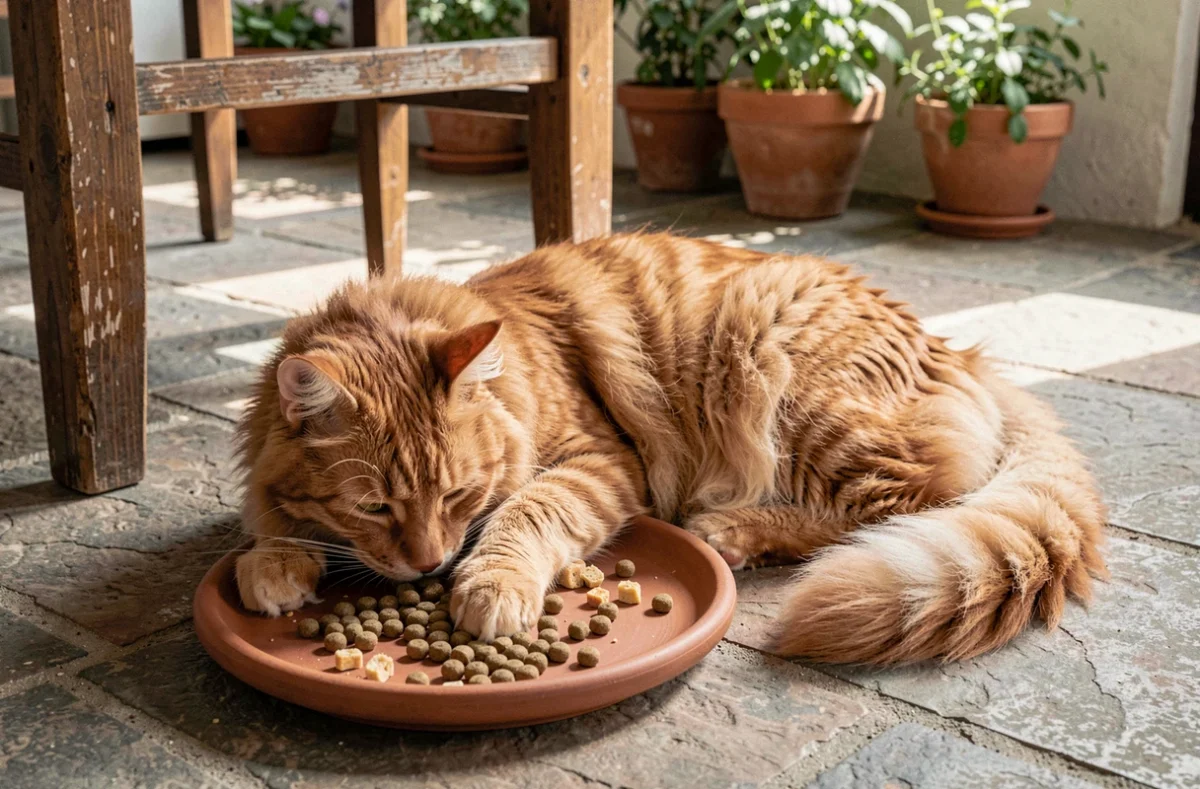
In terms of raw materials, cats show a marked attraction to animal proteins rich in specific amino acids, particularly taurine, which they cannot synthesize themselves.
A study by Maylina et al. published in 2025 highlighted that liver and kidneys are among the most appreciated foods, ahead of muscle pieces. Between lamb and beef, lamb offal seems to be preferred. However, an excess of liver exposes the cat to an overdose of vitamin A, with risks of bone and liver diseases.
Fish (tuna, salmon, sardines) attracts some cats due to its strong aromatic profile. Not all felines share this attraction. Some individuals completely ignore fish, confirming the strong individual component of preferences.
Summary of Observed Protein Preferences
- Offal (liver, kidneys): very high palatability, but should be strictly limited in quantity to avoid hypervitaminosis A
- Poultry (chicken, turkey): broad acceptance, moderate aromatic profile, well tolerated by most cats
- Fish: variable palatability depending on individuals, strong smell that can attract or repel
- Red meat (beef, lamb): appreciated, especially in the form of offal rather than pure muscle
Cats’ food preferences result from a combination of sensory, behavioral, and individual factors. A food rejected today may be accepted tomorrow if the texture, temperature, or context changes. The most reliable approach remains direct observation of each animal’s behavior in its daily environment, rather than following generic rankings.