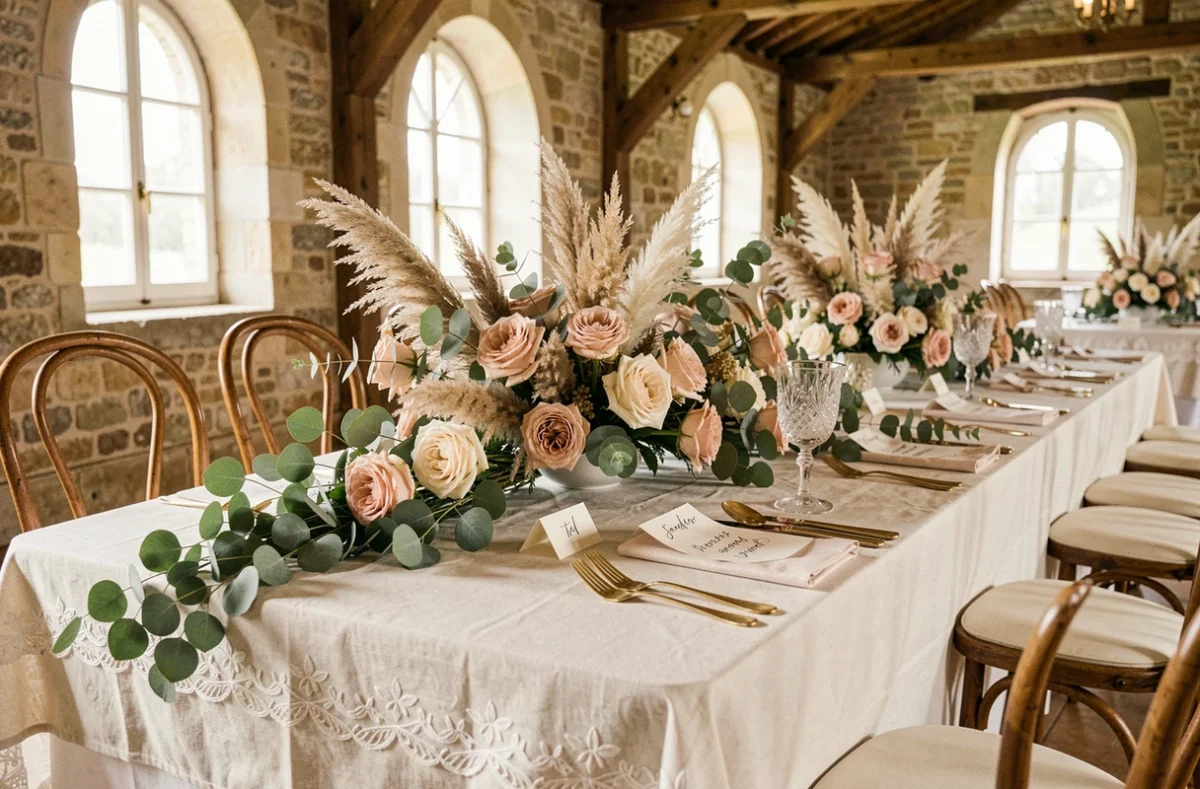
The choice of a color palette is not limited to selecting two colors from a swatch. We recommend starting from the location and the natural light available on the day of the event to establish the dominant shades. A personalized wedding decoration begins with this reading of the site, not from a disconnected Pinterest mood board.
Floral Scenography: Moving from Static Composition to Mobile Decor
Floral arrangements are evolving towards freer, asymmetrical, and generous forms. Tables uniformly adorned with identical centerpieces give way to organic and varied floral volumes from one table to another. The result gains visual depth and breaks the monotony of large gatherings.
The technical point that we rarely see addressed in inspiration guides concerns the reuse of flowers between different moments of the wedding. The same arrangements can be moved from the ceremony to the reception tables, then offered to guests or donated to an organization after the celebration. This circuit requires precise logistical anticipation: containers suitable for transport, fixtures compatible with quick disassembly, coordination with the florist on the timing between the ceremony and the meal.
Using seasonal French flowers reduces the cost per stem and improves the longevity of the arrangements throughout a long day. Peonies in June, dahlias in September, and anemones in winter each offer a distinct visual vocabulary. Adapting the floral theme to the wedding season produces a more coherent result than imposing an exotic variety out of season.
To explore the ranges of compositions, tablecloths, and matching accessories, the decoration on MB Mariage covers a wide spectrum of styles, from rustic to the most minimalist.
Furniture and Structure Rental: Contract Clauses to Check
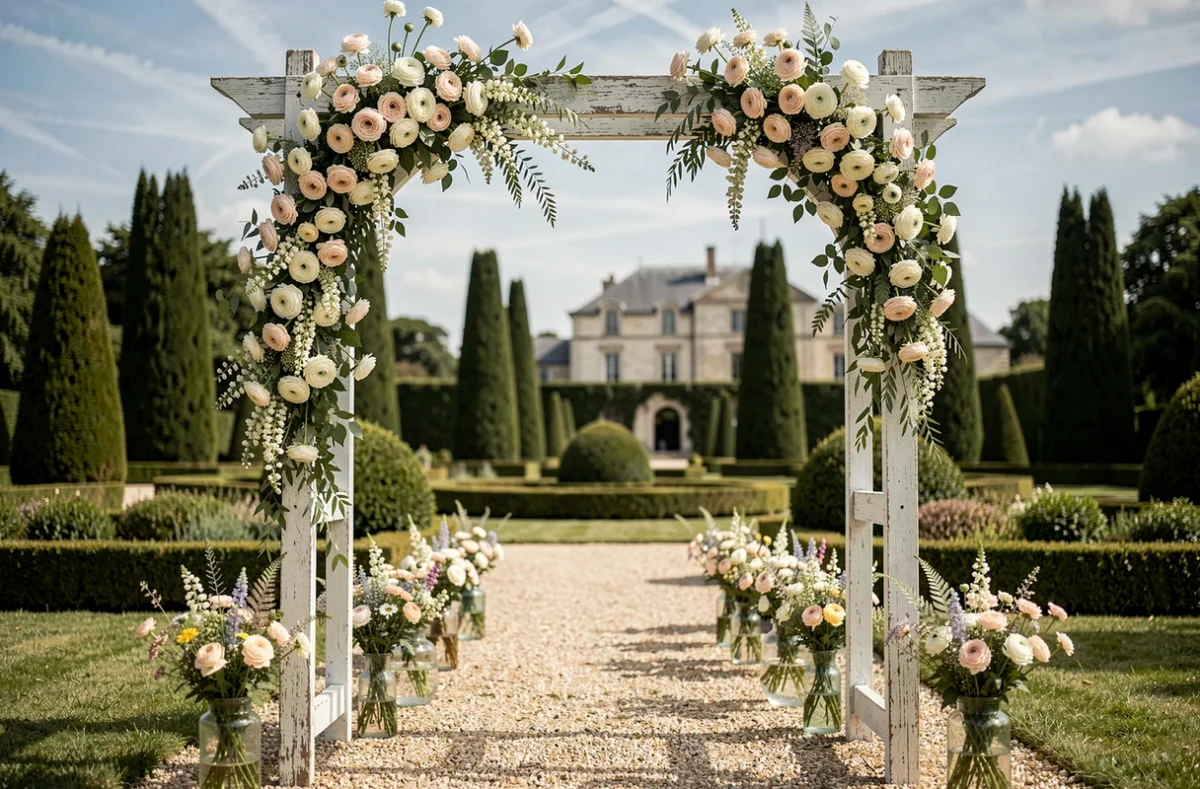
Arches, decorative chairs, table linens, mismatched dishware, tents: rental represents a powerful customization lever. We find that the displayed rates do not always include disassembly or return transport. This is a hidden cost that can represent a significant additional charge.
Temporary Outdoor Structures: Safety Constraints
When a tent or marquee hosts the public, regulations impose fire safety obligations that are not mentioned in any public inspiration guide. The fabrics must meet fire reaction standards. Ground anchoring and wind resistance are sized according to the covered area.
For an outdoor ceremony, the rental quote must explicitly mention:
- The round-trip transport and setup/takedown by the provider, with precise access times to the site
- The compliance of the fabric with applicable fire reaction standards for public establishments
- The liability insurance covering damages related to the structure throughout the duration of the event
Checking these three points before signing avoids unpleasant surprises on the big day, especially if the venue requires a compliance certificate.
Customized Table Decoration: Prioritizing Visible Elements
The table concentrates the majority of the time spent by guests. The seating plan, menus, place cards, and centerpiece form a cohesive set that must remain readable. Too much personalization on the table overwhelms the eye: embroidered initials on napkins, calligraphed menus, engraved candles, candies in a customized container. Choosing a maximum of two personalized items per place setting is enough to mark the couple’s identity without overloading.
The centerpiece deserves differentiated treatment depending on the shape of the table. On a round table, a low arrangement allows for conversation. On a long banquet-style table, tall arrangements alternated with candles create a visual rhythm. The height of the centerpiece affects the quality of exchanges between guests: above 30 cm on a round table, guests facing each other can no longer see one another.
Stationery and Signage: Typographic Consistency
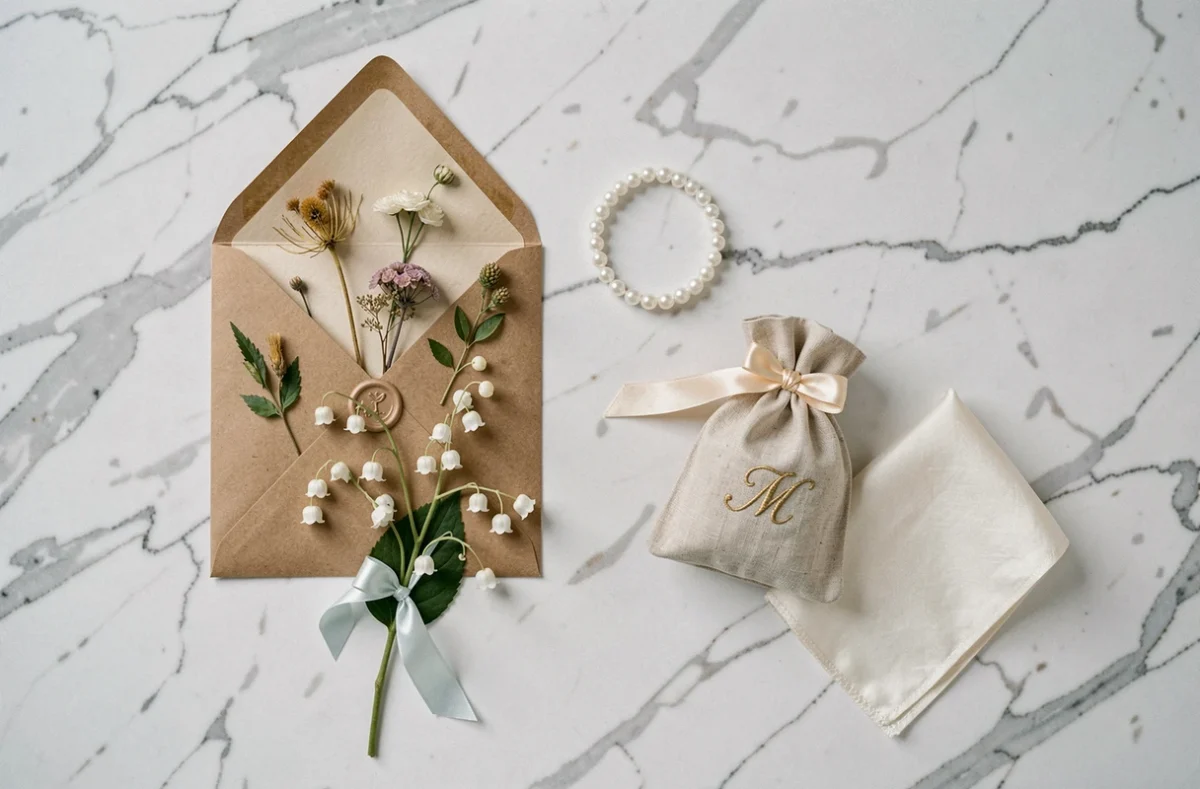
Welcome sign, seating plan, menu, place cards: we recommend using a single typeface family in two weights. The accumulation of decorative fonts (script, serif, fancy) results in an amateurish look, regardless of the chosen theme, whether vintage, bohemian, or rustic.
Kraft or textured paper works well for an outdoor wedding or in a venue with exposed wood. For a more classic setting (castle, private hotel), smooth, thick paper with fine typography produces a sharper result.
Guest Favors and Decoration: When the Keepsake Extends the Theme
While sugared almonds remain a classic, the guest favor benefits from being integrated into the table decor rather than placed aside in a separate bag. A scented candle that also serves as a place card, a small jar of local honey that complements the centerpiece, a bottle of olive oil labeled in the wedding colors: each option serves a dual purpose.
- Edible favors (sugared almonds, jam, personalized cookies) easily integrate into the table scenography and avoid post-event waste
- Reusable items (candle, soap, seeds to plant) extend the memory but must remain compact for transport by guests
- Photo favors (polaroid with frame, photobooth with prints) combine entertainment and keepsake, provided the flow of guests is planned
The goal is not to offer an expensive item, but an element that contributes to the overall decoration and that guests naturally take home at the end of the evening.
The coherence of a wedding decoration does not depend on the allocated budget but on the rigor of the guiding thread. A well-mastered theme across three well-chosen supports makes a stronger impression than a scattered decorative accumulation. Focusing resources on the elements that guests see the longest (the table, the ceremony space) and simplifying the rest produces a more elegant and readable result.