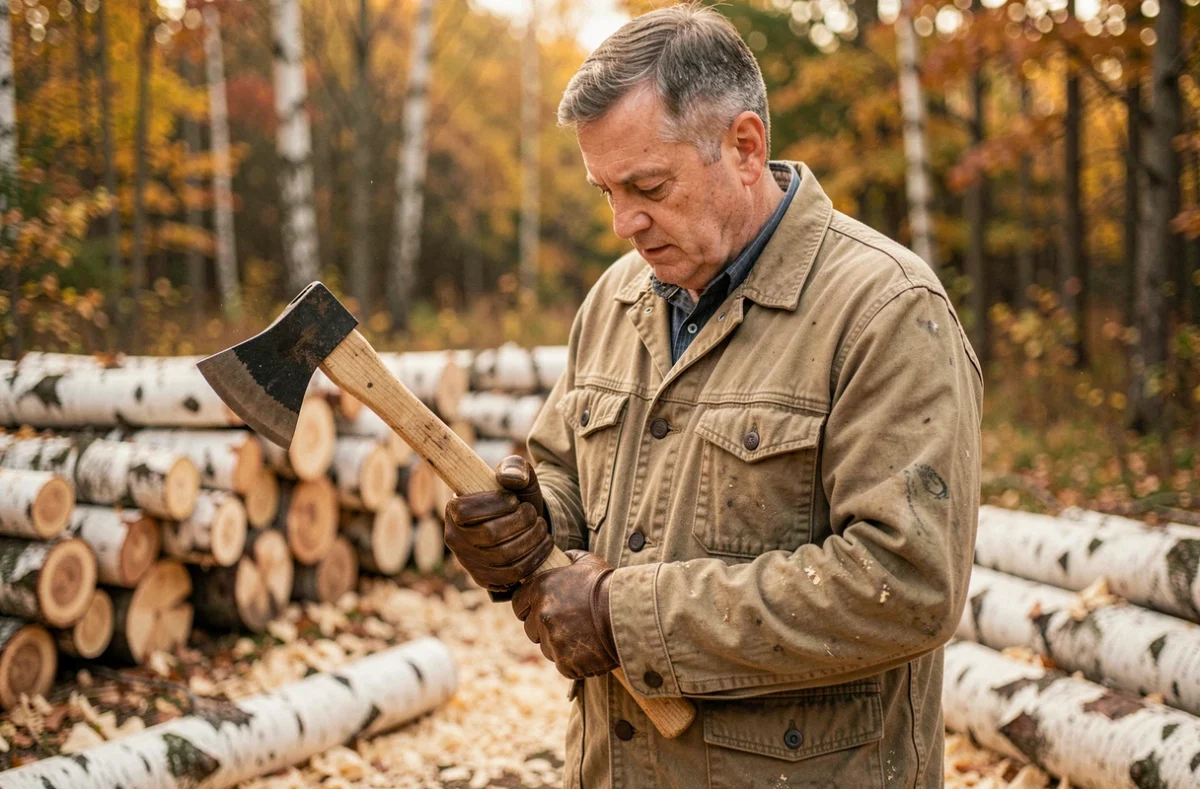
Splitting a pallet of oak logs with a camping hatchet, we’ve all seen someone try. The result: vibrations in the wrists, a dull edge, and barely touched wood. The problem isn’t strength, but the choice of axe. Adapting the tool to the specific task at hand radically changes the efficiency and safety of the action.
Blade steel and edge profile: what determines the cut
Before even looking at the shape or size of an axe, it’s the quality of the steel that determines edge retention and sharpening frequency. Hard steel retains its sharpness for a long time but can be more brittle on knotty woods. Softer steel absorbs shocks better, at the cost of more frequent sharpening.
A convex bevel penetrates and separates the fibers at the same time, making it suitable for splitting logs. A flat bevel, thinner, cuts the fibers cleanly: it’s found on felling and limbing axes.
Using a flat profile for splitting exposes the blade to getting stuck in the wood, while a convex profile on limbing tears the fiber instead of cutting it cleanly.
Catalogs mention terms like “C50 carbon steel” or “forged tempered steel.” These indications are worth noting, as they provide information on hardness and durability. Feedback on this point varies by brand and production batches, but hand-forged steel generally has a more uniform grain structure than industrially stamped steel.
To delve deeper into selection criteria based on each use, a practical guide on Ta Maison Ton Jardin details the correspondences between steel type, blade profile, and common tasks.
Splitting axe, hatchet, maul: adapting the format to the wood being worked
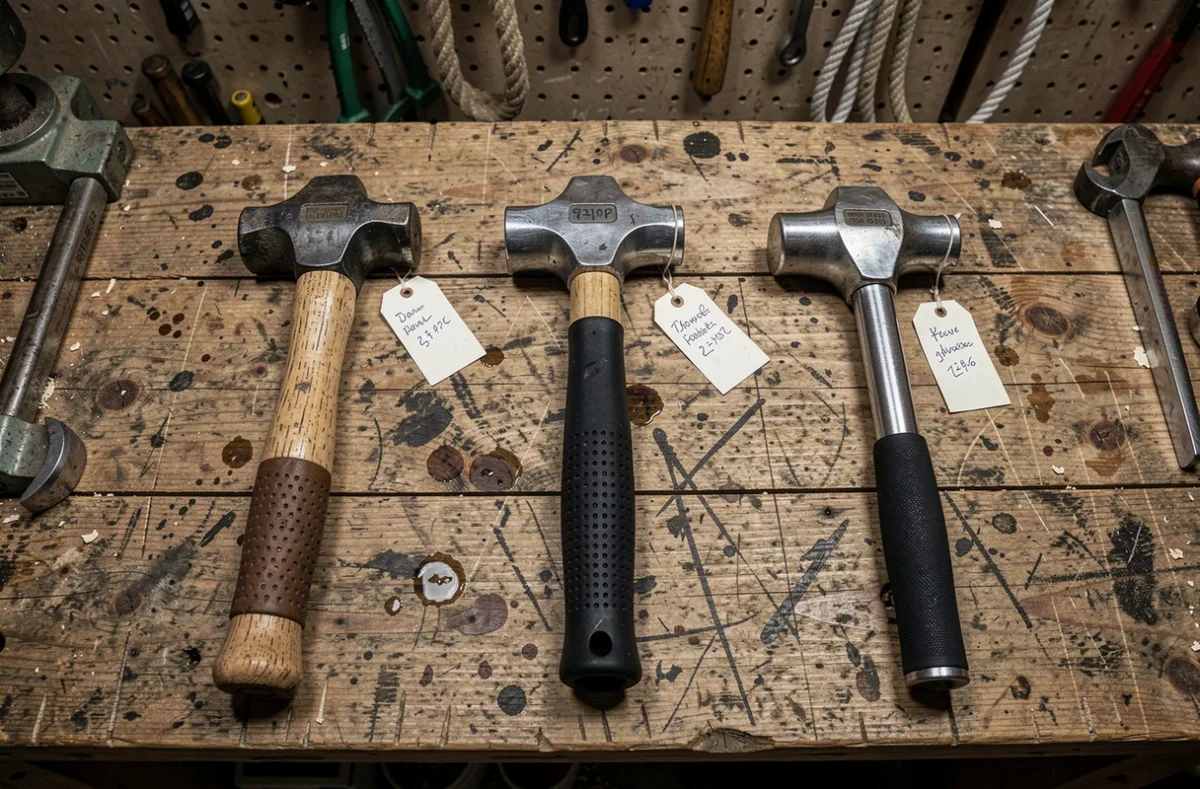
We don’t ask the same things of a hatchet as we do of a maul. The tool’s format directly depends on the diameter and hardness of the wood being tackled.
- The hatchet (short handle, light blade) is suitable for kindling, limbing thin branches, and outings in the forest where weight in the bag matters. It is handled with one hand.
- The splitting axe (medium to long handle, flared blade) is designed to split already cut logs. Its weight and convex profile work with gravity: you guide more than you force.
- The maul (heavy head, often combined with a flat side) tackles large sections of hard wood, such as oak or beech. It is also used to drive splitting wedges into stubborn logs.
Choosing a format that is too light for dense wood forces you to strike multiple times, which tires the arms and joints. Conversely, using a maul to cut small diameter softwood results in crushing the fibers instead of separating them.
Axe handle: wood or composite, length and grip
The handle is the part you touch, feel vibrate, and that breaks if poorly chosen. Two main families coexist: wooden handles (ash, hickory) and composite material handles (fiberglass, reinforced polymer).
An ash handle absorbs vibrations progressively, which is more comfortable during long splitting sessions. However, it can crack if stored in a too dry place and requires regular oiling to prevent drying out.
The composite resists moisture, does not crack, and tolerates careless storage in a garden shed. Some users find the impact sensation drier, with more vibrations transmitted to the hands. Fiskars, for example, has developed composite handles with an internal structure designed to limit this phenomenon.
The length of the handle determines the range of motion and impact force. For splitting, a long handle (around the distance from the ground to the hip) allows for a full swing arc. For limbing or precision work, a shorter handle offers better control.

Safety and protective equipment: the axe plus PPE combination
One point that axe selection guides almost systematically overlook: choosing an axe without planning for appropriate protections makes no sense. Wood chips, blade rebounds, and flying debris pose real risks, even for an experienced user.
Since 2022, European standards EN ISO 16321-1 and EN ISO 16321-3 regulate face and eye protection used during cutting work. The EN 397 standard on protective helmets was updated in April 2025, requiring professionals to check the compatibility of their helmets with current visors and hearing protection.
In practical terms, when choosing your axe, you should also check:
- A pair of protective glasses or a visor compliant with EN ISO 16321 standards, especially for splitting where chips fly at face height
- Anti-vibration gloves, particularly useful with composite handles that transmit more shocks
- Safety shoes with reinforced toes, because a slipping axe head from a log always falls toward the feet
Blade maintenance and storage: preserving the edge between uses
A well-maintained axe cuts better than a new, poorly sharpened axe. After each session, wiping the blade and applying a thin layer of oil (linseed, camellia, or mineral) prevents corrosion from setting in, especially on untreated carbon steels.
Sharpening is done with a flat file or stone, respecting the original bevel angle. Changing this angle to achieve a finer edge turns a splitting axe into an unsuitable tool that gets stuck without splitting the wood. Always work from the center of the blade toward the edge, maintaining a steady motion.
Storage deserves equal attention. A blade sheath (made of leather or rigid plastic) protects the edge and prevents accidents in the garage or workshop. Hanging the axe by the handle in a ventilated area prolongs the lifespan of the wood by avoiding prolonged contact with damp ground.
The right reflex is to consider the axe as a long-term investment. A quality model, properly maintained and stored, accompanies its user for decades without losing performance.