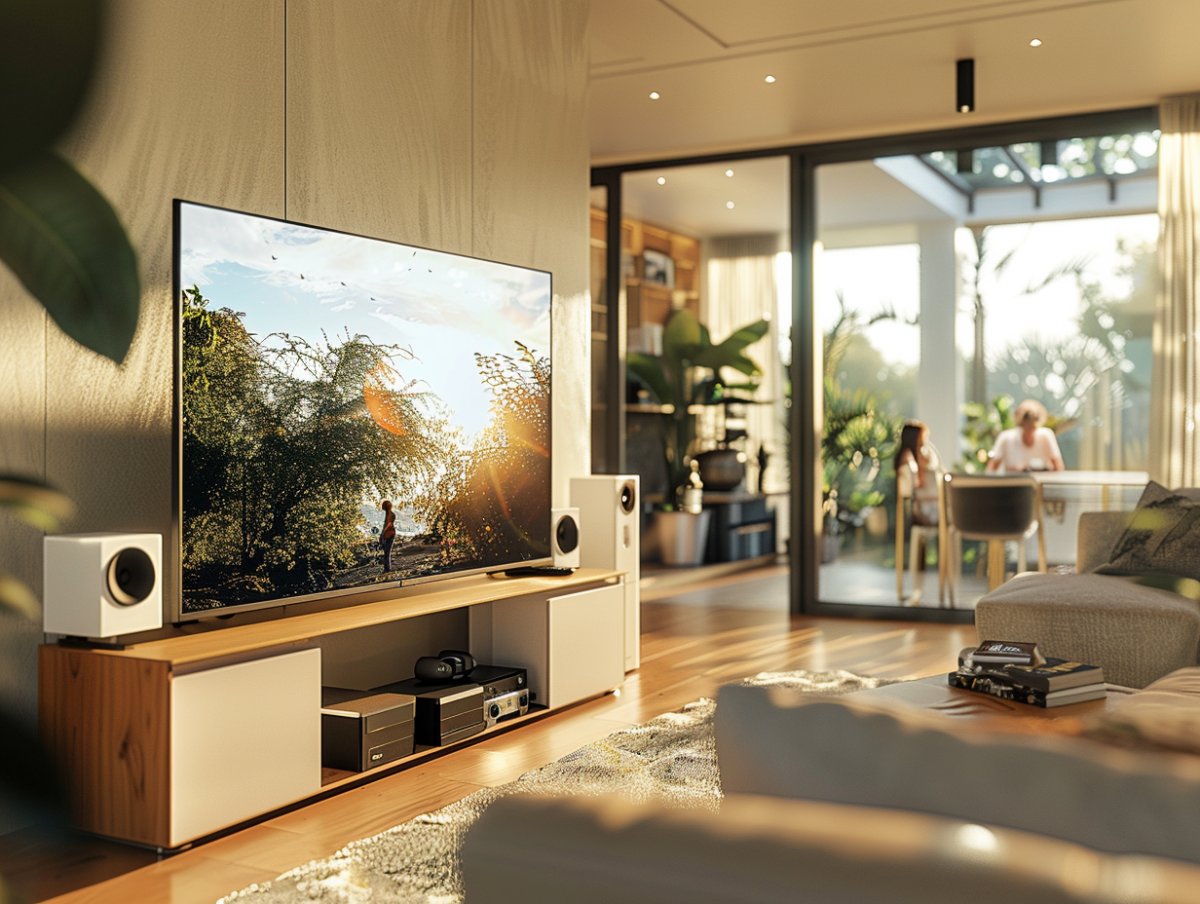
Television has evolved significantly since the early cathode ray screens. Today, it’s not just about choosing the screen size, but also selecting the features that will transform viewing into an immersive experience. From ultra-high-definition TVs to curved screens, there are many options to satisfy home cinema enthusiasts.
But innovation doesn’t stop there. Smart TVs, true technology powerhouses, allow access to a multitude of online services, from video on demand to streaming applications. For those looking to maximize their visual and auditory enjoyment, these devices offer nearly endless possibilities.
Hardware options to optimize your TV experience
To maximize your TV experience, several hardware options are available. Modern televisions, with their advanced technologies, provide exceptional picture quality. Models from brands like Samsung, LG, Sony, and Philips incorporate features such as High Dynamic Range (HDR) and Dolby Vision, ensuring bright colors and stunning brightness.
Connected TVs
Connected TVs, or Smart TVs, represent a significant advancement. They provide access to a multitude of online services, such as Netflix, Amazon Prime Video, and Disney+. The ability to display your smartphone screen directly on the TV via mirror mode or Screen Mirroring is a definite plus for easily sharing your photos and videos.
Smart TV boxes
For those who do not wish to invest in a new television, Smart TV boxes are an interesting alternative. But, how does a Smart TV box work? These devices connect to your TV via an HDMI port and offer the same features as a Smart TV. Popular models include the Amazon Fire TV, Android boxes, and Google Chromecast.
- Amazon Fire TV: access to a wide range of content and compatible with Alexa.
- Android Box: flexibility and access to the Google Play Store to download applications.
- Google Chromecast: simplifies streaming from your mobile devices.
Home theater
For total immersion, equip yourself with a high-performance sound system like Dolby Atmos or DTS:X. These cutting-edge technologies, beyond picture quality, will immerse you in the action with impressive sound spatialization.
Software and connected solutions for an enriched experience
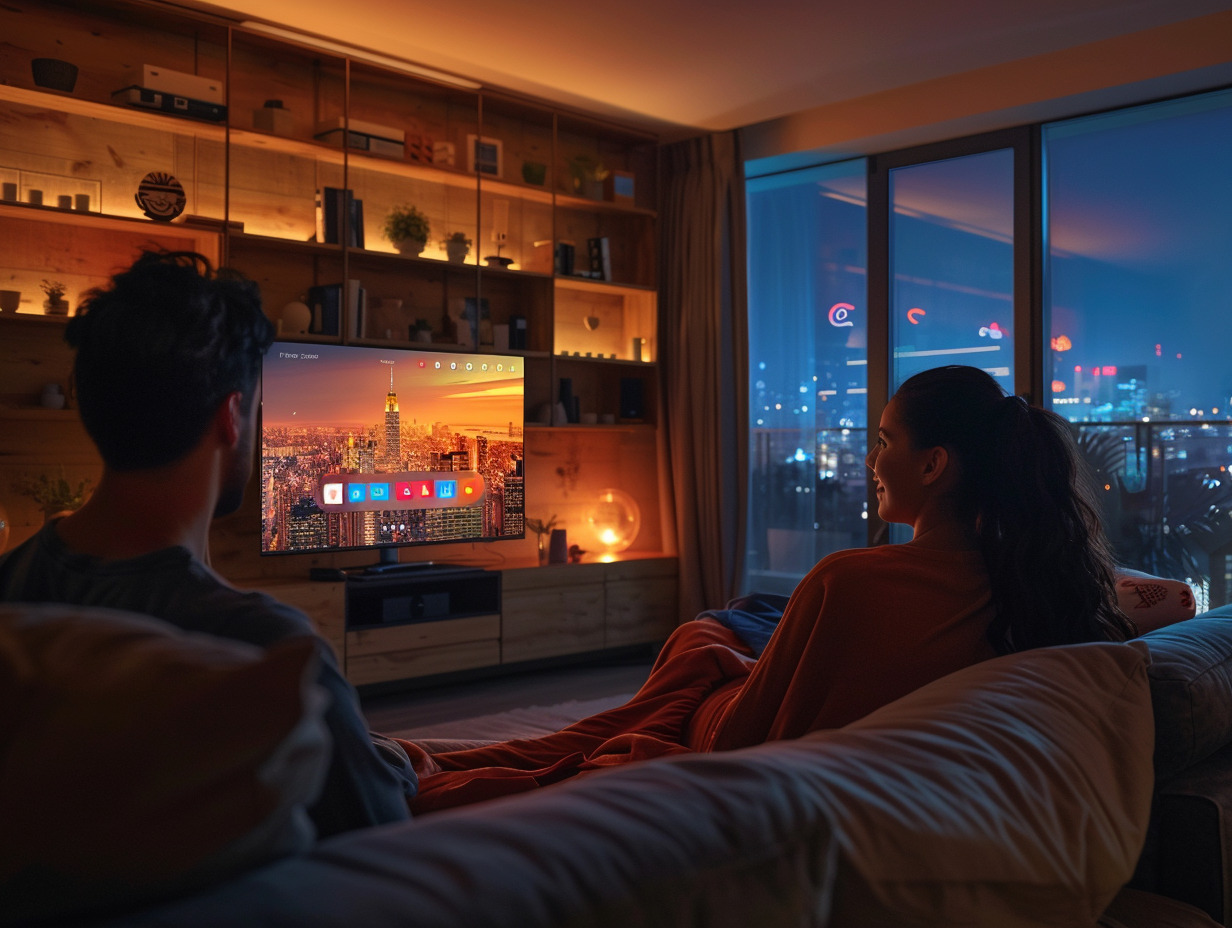
Software solutions play a key role in optimizing your TV experience. Connected TVs come with various operating systems, each offering specific features. The most common include Google TV, used by Sony, Philips, and TCL, and webOS, developed by LG. Samsung, on the other hand, favors Tizen, while Panasonic uses my Home Screen.
These systems allow access to a multitude of online services:
- Streaming: Netflix, Disney+, Prime Video, Molotov, Arte TV
- Video games: thanks to cloud gaming, play without a console
- News: real-time news updates
- Social networks: Facebook, Twitter directly on your screen
Voice assistants and interconnectivity
Connected TVs can be controlled by voice through voice assistants like Google Assistant, Alexa, or Bixby. These technologies also allow interaction with other connected devices, transforming your TV into a true smart home hub. Control the room lighting, roller blinds, or receive notifications directly on your screen.
Compatibility and supported formats
Technologies like DLNA, HDMI ARC, and HDMI eARC ensure extensive compatibility with various devices, especially for transmitting multichannel audio streams to a home theater receiver or soundbar. The most common video and audio formats, including subtitles, are supported, providing optimal usage flexibility.
HDR revolution
For exceptional picture quality, connected TVs support HDR, HDR10, and Dolby Vision technologies. These formats enhance brightness, contrast, and color fidelity, immersing you in a realistic and immersive visual experience.